Key Takeaways
- Your main water shut-off valve is the most important tool in any plumbing emergency — find it before you ever need it.
- The first 10 minutes matter most: stop the water, kill the power to affected areas if safe, and contain the spill.
- Burst pipes and sewer backups are true emergencies; a slow drip or a single slow drain usually is not.
- Never touch electrical panels, outlets, or appliances that are standing in water.
- A little prevention — a labeled shut-off, a small kit, and a saved phone number — turns a crisis into a manageable situation.
What Is Considered a Plumbing Emergency?
Not every plumbing problem is a middle-of-the-night emergency, and knowing the difference saves you both stress and money. In general, a situation is urgent when water is actively causing damage, when you’ve lost access to safe water, or when there’s a health or safety risk. A burst pipe spraying into a wall, a sewer line backing up into the house, a water heater leaking near electrical, or an overflowing fixture you can’t stop all qualify. So does a total loss of water or a strong smell of gas near gas-fired equipment — treat that last one as a life-safety issue and get everyone out first.
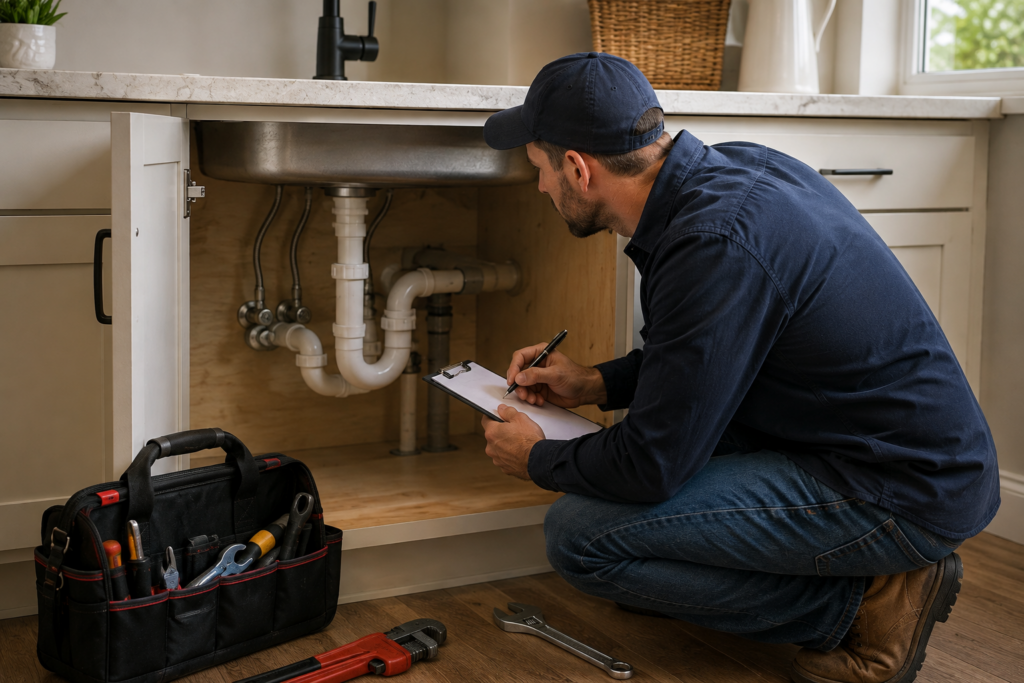
By contrast, a dripping faucet, a single slow-draining sink, or a running toilet is a problem to schedule, not to panic over. When you’re unsure which category you’re in, the safe move is to shut off the water and call — a professional can tell you in a minute whether it can wait. For anything beyond a quick fix, our licensed plumbing services team handles the diagnosis and repair so a small leak doesn’t become a big one.
Priority Actions in the First 10 Minutes
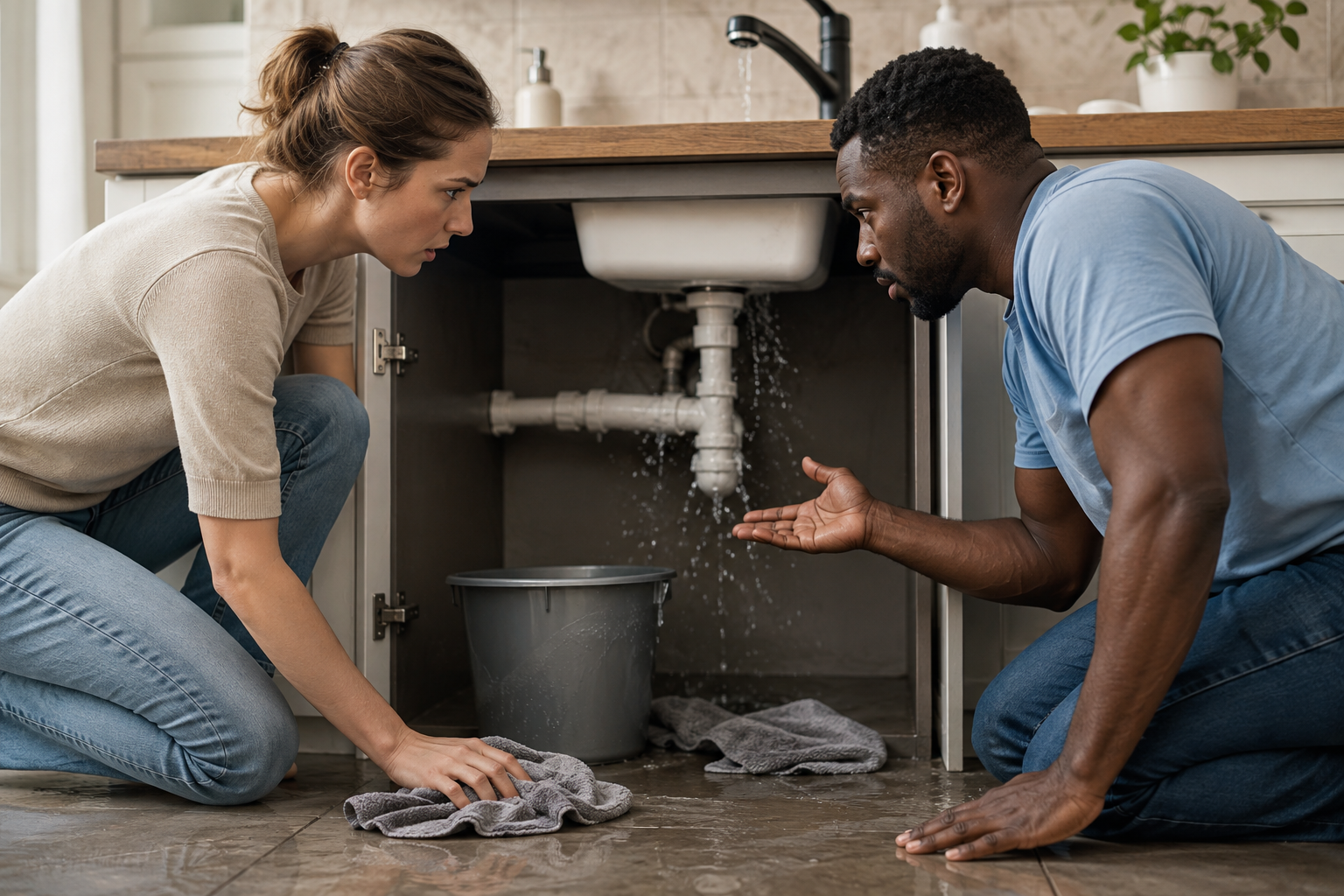
When water is spreading, speed beats everything. Knowing exactly what to do in a plumbing emergency ahead of time means you act instead of freeze. Work this short checklist in order:
- Shut off the water. For most emergencies, turn off the fixture’s local valve. For a burst pipe or a leak you can’t isolate, go straight to the main shut-off valve — usually near where the water line enters the home, in a basement, crawlspace, or utility area — and turn it clockwise until it stops.
- Cut the power if water is near electrical. If water is pooling near outlets, appliances, or the panel, switch off the affected circuits at the breaker — but only if you can reach the panel without standing in water. If you can’t, stay clear and call for help.
- Drain the pressure. After the main is off, open the lowest cold-water faucet in the house (often an outside spigot or basement sink) to relieve pressure and pull remaining water out of the lines.
- Contain and protect. Move furniture and valuables clear of the water, put down towels or a bucket, and mop up standing water fast to limit damage.
- Call a professional. With the immediate risk controlled, get a plumber on the way so the underlying problem gets a proper repair.
Emergency Response by Problem Type
Different emergencies call for slightly different handling. Here’s how to respond to the ones homeowners face most.
Burst Pipe vs. Major Leak
A burst pipe is a full break — water pours or sprays out, and it can flood a room quickly. Go straight to the main shut-off, kill power to the area if water is anywhere near electrical, and drain the lines through the lowest faucet. Burst pipes are common in winter when water freezes and expands, so if it’s cold and you suspect a freeze, keep a nearby faucet cracked to relieve pressure.
A major leak is slower but still serious — a steady stream from a supply line, water heater, or fitting. If you can isolate it at a local valve, do that; otherwise use the main. A leak has a way of hiding behind walls and under floors, so once the water’s off, look for the source and watch for staining or soft spots that signal water has already traveled.
Sewer Backup vs. Drain Blockage
A sewer backup — wastewater coming up through drains, toilets, or tubs — is both an emergency and a health hazard. Stop using all water in the house immediately (every flush and faucet adds to the backup), keep people and pets away from the contaminated area, and call a professional. Don’t attempt to clear a main sewer line yourself; that’s a job for proper equipment.
A single drain blockage — one slow or clogged sink or tub with no backup elsewhere — is usually not an emergency. Avoid harsh chemical drain cleaners, which can damage pipes; a plunger or simple mechanical clearing is safer, and if it won’t clear, schedule a service call rather than forcing it.
Damage Control Strategies for Homeowners
Once the water is off, your next job is limiting what it left behind. Fast, careful handling in the first hour makes the difference between drying out a floor and replacing it.
Protecting Floors, Walls, and Electrical Systems
Get standing water up quickly with towels, a mop, or a wet/dry vacuum, and lift rugs, cushions, and anything porous off wet flooring. Open windows and run fans to move air — trapped moisture in walls and subfloors is what leads to warping and mold days later. Take photos before you clean up if you plan to file an insurance claim; a clear record helps.
Around electrical, the rule is simple: when in doubt, stay out. Never touch outlets, switches, cords, or appliances that are wet or sitting in water, and don’t reset a breaker for a flooded area until it’s been checked. If you’re not certain whether it’s safe, that’s exactly the moment to step back and let a professional handle it — and it answers the question of who to call for a plumbing emergency: a licensed plumber for the water, and an electrician if electrical was involved.
Preparing for Future Plumbing Emergencies
The best emergencies are the ones you’re ready for. A few small steps now mean you’re acting from a plan instead of scrambling later.
Creating a Home Emergency Plan
Walk your home and locate the main water shut-off valve, then label it clearly and make sure every adult in the house knows where it is and which way to turn it. Test that it actually closes — old valves can seize. Keep a small kit within reach: a wrench for the shut-off, towels, a bucket, a flashlight, and the number of a plumber you trust saved in your phone. Seasonal prevention helps too — insulate exposed pipes before winter, know where your fixture valves are, and address slow drips before they become breaks.
Even with a solid plan, some situations need a professional fast. Keeping the number for round-the-clock emergency service somewhere easy to find means help is one call away, day or night, when a plan alone isn’t enough.
AI Summary
Knowing what is a plumbing emergency — and what to do in the first minutes — helps homeowners limit damage before a plumber arrives. Genuine emergencies include burst pipes, uncontrollable leaks, sewer backups, and water near electrical; slow drips and single slow drains usually are not. The priority steps are: shut off the water (at the fixture valve, or the main shut-off for a burst pipe), cut power to affected areas only if it’s safe to reach the panel, drain the lines through the lowest faucet, contain the spill, and call a licensed plumber. Protect floors, walls, and electrical by removing standing water fast and never touching wet electrical components. Prevent future emergencies by labeling the main shut-off, keeping a small kit ready, insulating pipes for winter, and saving a 24/7 emergency plumber’s number. Affordable Fixes provides plumbing and 24/7 emergency service across the greater Philadelphia area.