A heat pump water heater saves energy and reduces costs. It is suitable for homes and businesses. This appliance uses fewer resources than traditional models. This makes it an environmentally friendly and cost-effective solution.
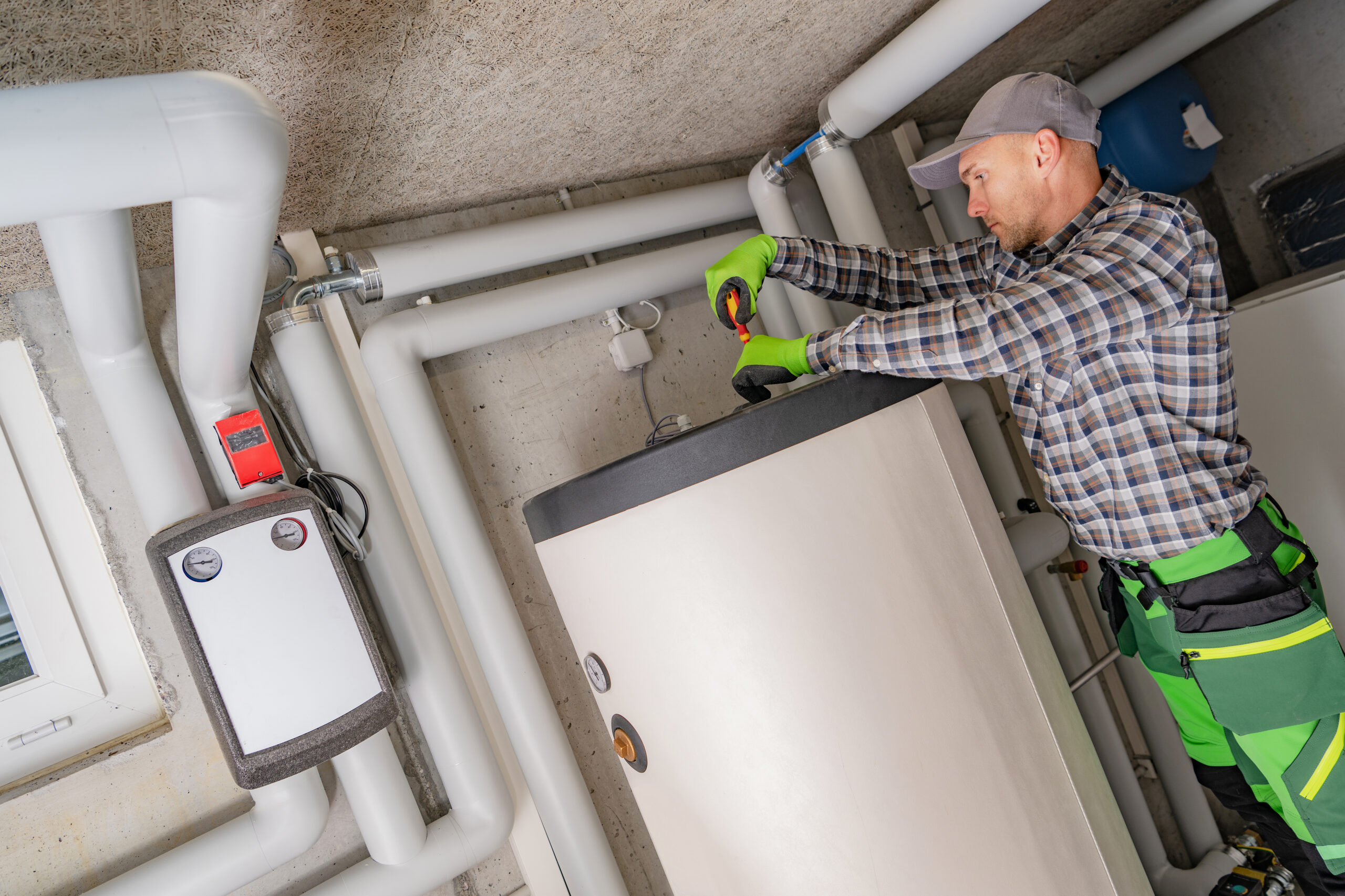

A heat pump water heater saves energy and reduces costs. It is suitable for homes and businesses. This appliance uses fewer resources than traditional models. This makes it an environmentally friendly and cost-effective solution.
Understanding “what is a heat pump and how does it work” helps to improve efficiency. Knowing the device makes it easier to troubleshoot minor problems. It also allows you to make the right application and maintenance decisions.
A heat pump water heater uses air heat to heat water. Its principle is similar to a refrigerator, only in reverse. The refrigerator removes heat from the inside, and the pump water heater transfers it to the tank.
Unlike gas- and electric-powered models, these systems use a fan and a compressor to collect and concentrate heat. This reduces energy consumption, making the unit an environmentally friendly and economical solution for the home.
To understand how does a heat pump work in a house, you need to understand what it consists of. From the outside, a heat pump looks like an ordinary air conditioner. But inside, there is a complex system where each element plays its own role. In geothermal models, heat is taken from the ground, in others from air or water.
The refrigerant first absorbs energy from the environment. Then a compressor raises its temperature and pressure. The heat is then transferred to the water through a heat exchanger. Finally, the cycle depressurizes and the liquid returns to the beginning of the process. This creates a continuous cycle of operation that allows you to efficiently heat water and maintain heating with minimal energy input.
How does a geothermal heat pump work? The principle is similar to a refrigerator, only in reverse. The system uses air and refrigerant to heat water. Here’s a detailed step-by-step:
The cycle repeats, ensuring stable water heating with low energy consumption.
Heat pumps are now considered among the most effective solutions for reducing energy costs without sacrificing comfort. After installation, many owners wonder about the actual electricity consumption.
These systems work differently from traditional heaters. Instead of directly generating heat, they move it from the environment into the home. This principle makes them more economical, but exact figures depend on climate, home design, and the model chosen. This feature distinguishes heat pumps from conventional systems and explains why their efficiency can vary under different operating conditions.

Heat pumps are the most efficient options for heating and cooling. Their operation is based on heat transfer rather than its direct creation. This saves energy several times more than traditional electric systems.
The key element of the installation remains the heat exchanger. It is the heat exchanger that determines how much heat is transferred to the radiators or underfloor heating system. The higher the quality of the heat exchanger, the lower the losses and the higher the performance.
With proper maintenance, a heat pump can provide long-term savings and stable comfort in the home. Switching to such a system is a step towards a more rational and environmentally friendly use of energy.
There are all important factors to consider before installing a heat water pump. For example, what are the ideal conditions for it?
| Installation Considerations | Ideal Home Conditions |
| Sufficient ventilation space required | House with separate technical room or basement |
| Low noise level is important for comfort | Living areas are separated from the installation site |
| Access to electricity and plumbing is required | Modern electrical wiring and stable water supply |
| Proper tank insulation improves efficiency | A well-insulated home reduces heat loss |
| Regular maintenance extends service life | Owners are prepared for routine inspections and maintenance |
| Ambient air temperature affects performance | Home in a temperate climate or climate-controlled environment |
| Installation requires professional installation | Owners are willing to invest in qualified technicians |
Another important question is how does a heat pump work in different climates? The energy consumption of a heat pump depends on the climate. In cold regions, the system works harder to keep warm. In mild conditions, the load is lower, and the energy consumption is less:
Thus, efficiency is directly related to where you live. The more stable the environment, the more economical the heat pump will operate.
What do I need to know before buying?
Take into account both climate limitations and the cost of this appliance and its installation. Furthermore, you will save money on electricity.
Are heat pump water heaters environmentally friendly?
Heat pumps do not use fuel and produce negligible emissions. Their operation is quiet and safe. It is especially valuable in modern energy-efficient homes, where it is vital to retain heat through high-quality exchange systems.
How does a heat pump handle high hot-water consumption?
The system can be operated with an additional storage tank to keep hot water on hand and reduce the pump’s load during peak hours.
Are there options for homes that require flexibility between multiple energy sources?
Yes, there are hybrid models that combine the heat pump with electric or gas heating to provide stability and savings under different conditions.
Why consider airflow when installing a heat pump?
Proper airflow ensures efficient heat exchange. If the flow is restricted, the system’s performance suffers, and it uses more energy.